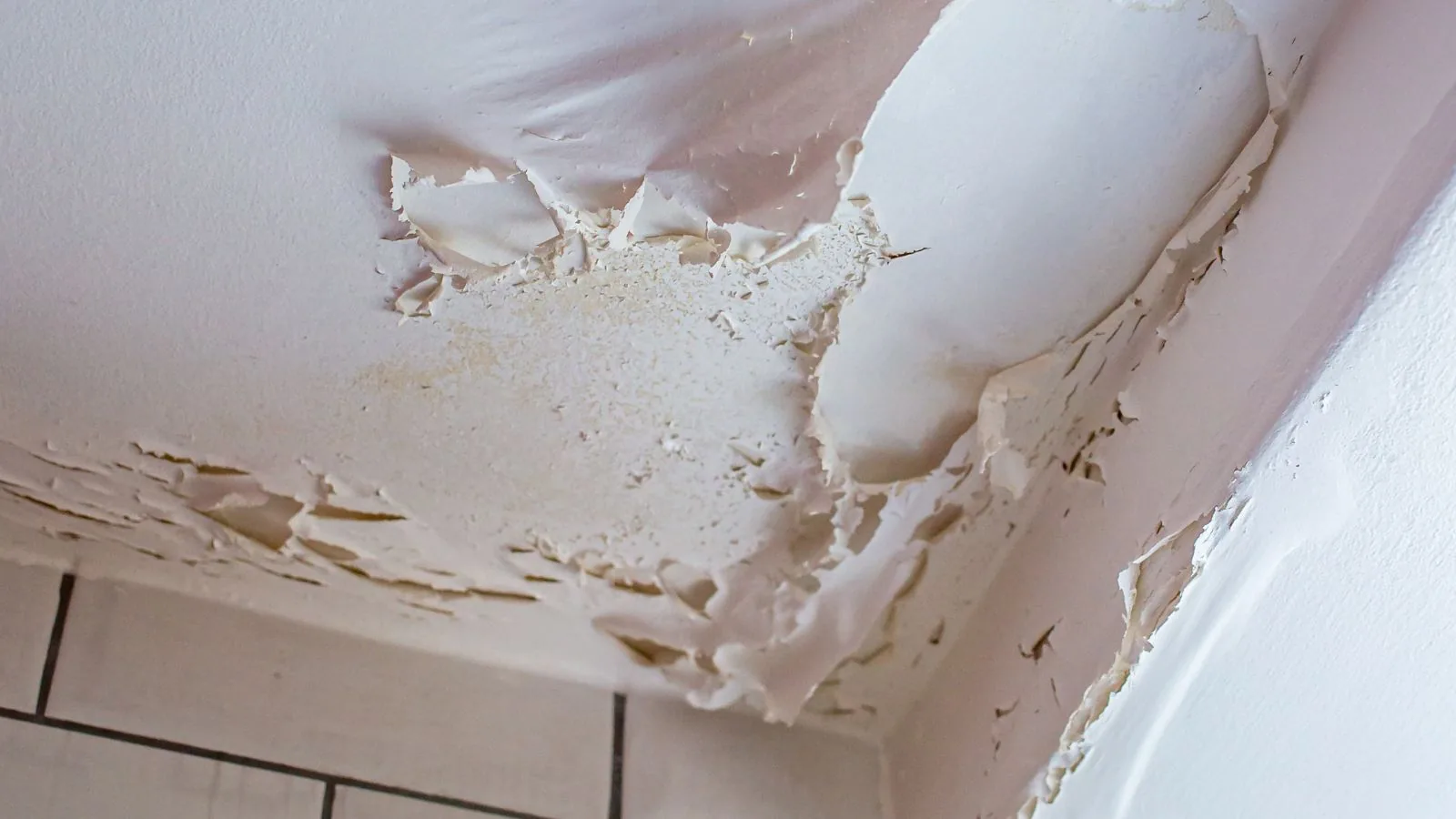
People search for pictures of black mold because dark spots on a wall or ceiling worry them. The honest answer is that you cannot tell the type of mold from its color. Many molds look dark, and some dark stains are not mold at all. If water is still coming in, call our 24/7 line at (813) 738-0233 and a same-day response is available when a crew is free.
This page does not make health claims. It explains what growth often looks like, what mimics it and the right next step.
Common Looks of Mold Growth
- Speckled or spotty dark patches on drywall, grout or ceilings.
- Fuzzy, powdery or slimy texture on damp surfaces.
- Green, gray, brown or black colors, often in the same patch.
- Growth that follows a water line or sits in corners with poor airflow.
- A musty odor in the room, even when no growth is visible.
| Looks like mold | Could also be | How to tell |
|---|---|---|
| Dark ring on a ceiling | Water stain | Moisture reading and a close look for fuzzy growth |
| Black dots on bathroom grout | Soap film or mildew | Clean a spot and see if it returns |
| Dark streaks near vents | Dust or soot deposit | Wipe test, check for dampness |
| Black spots on a window frame | Dirt or condensation staining | Check for moisture and odor |
Where Growth Hides
Growth often starts out of sight: behind baseboards, under sinks, above ceiling tiles, inside wall cavities and under carpet pad. A smell can come first, and visible growth later.
After a leak, open cabinet doors and look at the underside of the sink. A flashlight shows more than the room light does. If material is soft or swollen, there is moisture present.
Walls are the most common hiding place. See wall and drywall water damage repair for how a wet wall is read, dried or opened.
Florida Conditions That Feed Growth
The National Weather Service in Tampa Bay says most of the area's rainfall comes from June through September. High humidity indoors in those months can keep materials damp, especially in closets, bathrooms and rooms with the air conditioning off.
Florida licenses mold assessors under Chapter 468, Part XVI. An assessor, not a guess from a photo, is the right person to say what is present.
What to Do If You See It
Leave it alone
Do not scrub or sand. Keep the room closed.
Find the moisture
Look for leaks, wet materials and humidity.
Take photos
Photos help an assessor and your insurer.
Call for a reading
A moisture check and, if needed, an assessment show the scope.
If you plan to sell, read mold remediation for clearance testing. A record of the work helps buyers and lenders.
Crews in Wimauma and Sun City Center can read moisture in the walls the same day when a crew is free.
Smell, Surface and Timing Clues
Mold often announces itself by smell before it shows. A damp, earthy odor that returns after cleaning is a clue that moisture remains. Surfaces may feel tacky, and paint may bubble or peel.
Timing helps. Growth that appears within days of a leak, flood or humid spell points to a water event. Stains that never change over years may be old marks.
Dealing With This Right Now?
Call the 24/7 line. We explain the scope and the price before any work starts.
Photos Are Useful, but Not Proof
Take clear photos with a ruler or coin for scale and note the room, date and nearest water source. Photos help an assessor, a contractor and an insurer see the change over time.
A photo cannot tell the type of mold or the extent behind the wall. A moisture meter and, where needed, sampling by a licensed assessor give a real answer.
Who to Call and in What Order
| Need | Who helps | Notes |
|---|---|---|
| Active leak or wet materials | Plumber, then restoration crew | Stop the water, then dry |
| Question about what the growth is | Licensed mold assessor | Florida licensed under Ch. 468 Part XVI |
| Removal of affected materials | Licensed mold remediator | Works from the assessor protocol |
| Rebuild after drying | General contractor | After clearance |
We handle the water side and explain the scope and price before work starts. Our mold remediation page lays out the process and the licensing rules.
If the growth followed a roof leak or an air conditioner problem, the repair of that source comes first.
Mildew, Soot and Stains Compared
Mildew is a surface growth that often looks flat, powdery or gray-white. Soot is a dry black residue from combustion, such as candles or fireplaces. Water stains are tan or brown rings with edges that mark where water dried.
Mold can look like any of these. That is why the tests are moisture, smell, texture and, where needed, an assessor's sampling. Our mold-versus-mildew guide on the blog covers the surface differences in more depth.
After Water Damage: What to Watch For
- A musty smell in a room that was wet last week.
- Spots on the back of baseboards when you pull them off.
- Peeling or bubbling paint above a leak.
- Dark patches on the underside of carpet or pad.
- A stain that grows each time it rains.
If any of these appear after a leak, call for a moisture reading before painting or replacing materials. Crews in Balm and Sun City Center can check walls and floors with meters, and our line takes calls 24/7.
The earlier the readings, the smaller the repair usually is.
Sources and Standards Behind This Page
Assessment and removal guidance follows the ANSI/IICRC S520 standard for mold remediation. Licensing information comes from Chapter 468, Part XVI of the Florida Statutes.
Mold Appearance Questions
No. Color does not identify a type and we make no health claims. An assessor can sample and interpret.
No. Soot, dirt and water stains can look similar. A moisture reading helps.
Kits show presence but not extent or cause. A licensed assessor gives context.
Find and stop the moisture. Then get the area assessed.