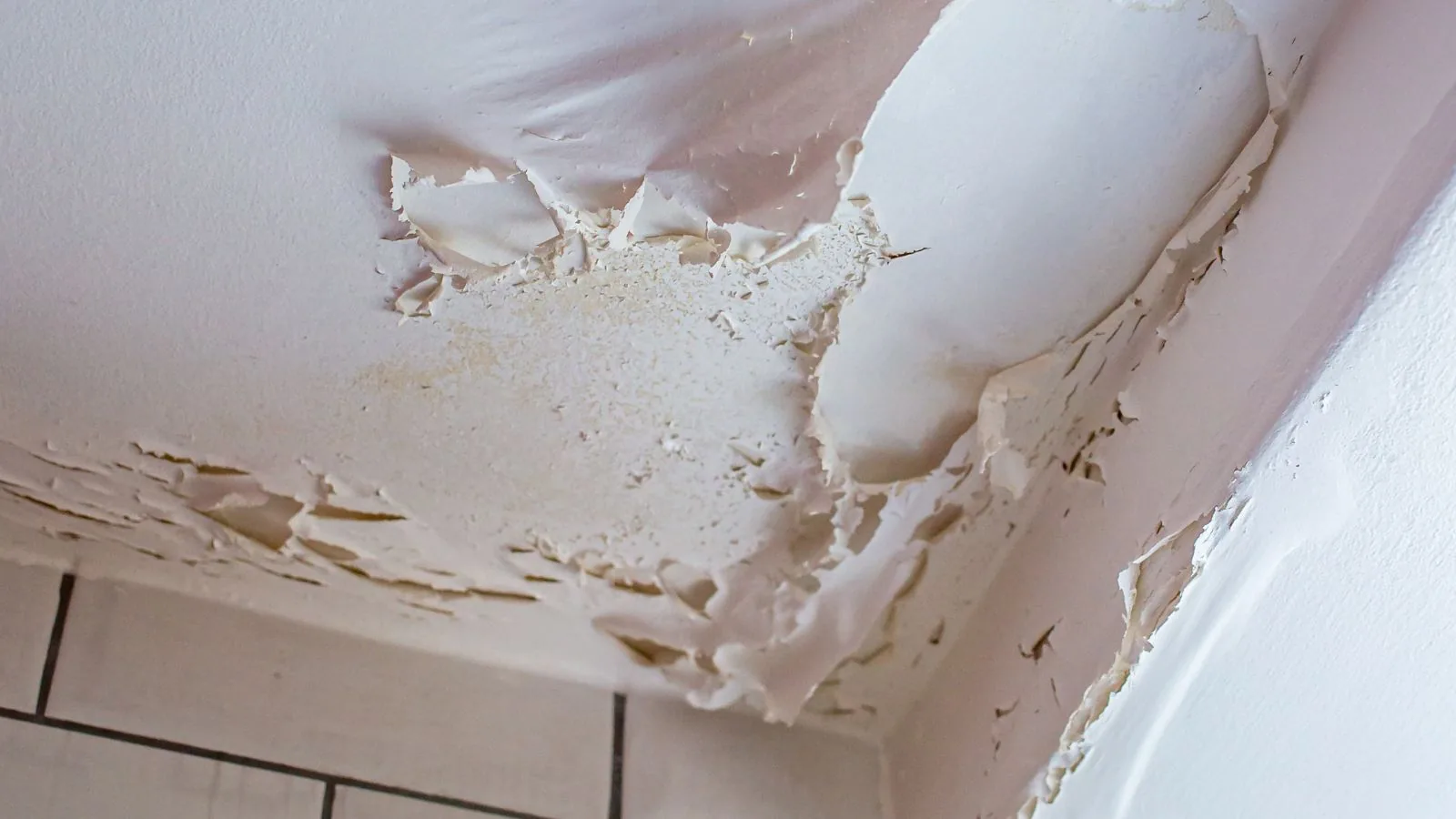
An active ceiling leak is an emergency, especially when the drywall is sagging. Keep people out from under a bulge, put a bucket under the drip, and turn off ceiling lights and fans in that room. This line is open 24/7 and a same-day response is available when a crew is free.
Ceiling water damage is the staining, softening and collapse of drywall or plaster after water collects above it. The source is usually a roof leak, an attic supply line, an air handler or a bathroom above, so the repair starts with finding where the water came from.
Sagging Ceiling Emergency: What to Do First
- Stay out from under any bulge or sag, because wet drywall can drop without warning.
- Poke a small hole in the lowest point of a bulge only if you can stand clear, so trapped water drains into a bucket.
- Switch off the light fixture and fan beneath the leak at the wall switch.
- Photograph the stain and the drip before anything is moved.
- Call the line and say if the water stops when the rain does, because that points to the roof.
Reading the Stain
| What the ceiling shows | Likely source | Repair path |
|---|---|---|
| Tan ring that grows after rain | Roof or flashing | Dry the ceiling, repair the roof first, then patch and repaint |
| Constant drip with no rain | Supply line or drain above | Stop the line, extract, open and dry the cavity |
| Stain below an air handler | Condensate drain overflow | See AC leak water damage |
| Bubbled paint and soft drywall | Water in the cavity for days | Remove wet board and insulation, dry, rebuild |
Roof Leaks and the Ceilings Below Them
Roof leaks are the most common reason Sun City Center ceilings stain, and the rainy season is when they show up. The National Weather Service reports that heavy rainfall peaks from July to early September, and wind-driven rain finds weak flashing, lifted shingles and tile gaps. A roofer fixes the opening, and we dry and repair the damage underneath.
Do not wait for the next storm to see whether the stain grows. Wet insulation holds water against the drywall long after the rain stops, which is why a ceiling can keep sagging for a week after a leak. Ask Hillsborough County Development Services if your roof repair needs a permit before work begins.
A temporary tarp is the roofer's job, not ours, but we will tell you what the attic needs once the roof is closed.
Water Still Spreading? Call Now
The 24/7 line is open. We explain the scope and the price before any work starts.
How a Wet Ceiling Is Dried and Repaired
The crew checks moisture in the board, the insulation and the framing with meters and a thermal camera. Wet drywall that has softened is cut out, and wet insulation is removed. Air movers and dehumidifiers dry the framing and the room.
After drying, the ceiling is patched, textured and painted. Ceiling repair often connects to wall and drywall repair when water ran down inside a wall, and to structural drying when the cavity stayed wet.
Crews working near Balm and Wimauma often see roof leaks on newer builds where flashing was not sealed well. Whatever the age, the cause gets fixed first.
What affects the cost of ceiling repair
Cost follows how much ceiling is wet, whether insulation has to be replaced and whether the water also reached walls or floors. A single patch is a very different job than a whole room.
Insurance often responds to sudden roof leaks and not to long-term seepage, so check your policy or ask your insurer. Want your real number? Call (813) 738-0233.
- Square footage of wet ceiling
- Insulation involved
- Texture and paint matching
- Whether walls below also got wet
- Drying days
Sources and Standards Behind This Page
Ceiling and roof-leak steps reflect the ANSI/IICRC S500 standard for professional water damage restoration. Rainfall timing comes from the National Weather Service in Tampa Bay, which reports that most local rain falls from June through September.
Ceiling Leak Questions From Sun City Center
Yes. The line is open 24/7 and a same-day response is available when a crew is free. Keep clear of any sagging area and call right away.
Only if you can stand safely to the side. Releasing trapped water into a bucket can prevent a larger collapse.
A roofer repairs the roof opening. We dry the structure and repair the ceiling after the leak is stopped.
Not always, but a stain that stays damp can grow mold. Dry it quickly and read about mold remediation if you see growth.
Texture and paint are matched as closely as possible, and a full room repaint gives the cleanest result.