Wall Still Cool, Baseboards Soft, Musty Smell After the Leak? The Structure Is Still Wet
If you mopped up the water and the room still smells musty, or the drywall feels cool and the baseboards are soft, moisture is trapped inside the materials. The trade term for removing it is structural drying, and it works with controlled airflow and dehumidification.
Structural drying is the process of removing moisture from walls, floors, framing and subfloors with air movers, dehumidifiers and daily moisture readings. Dehumidification is the half that pulls the water out of the air so more can leave the materials.
It follows extraction and comes before repair. A house that is rebuilt before it is dry traps moisture behind new drywall, and that is where mold begins.
How Drying Is Planned and Checked
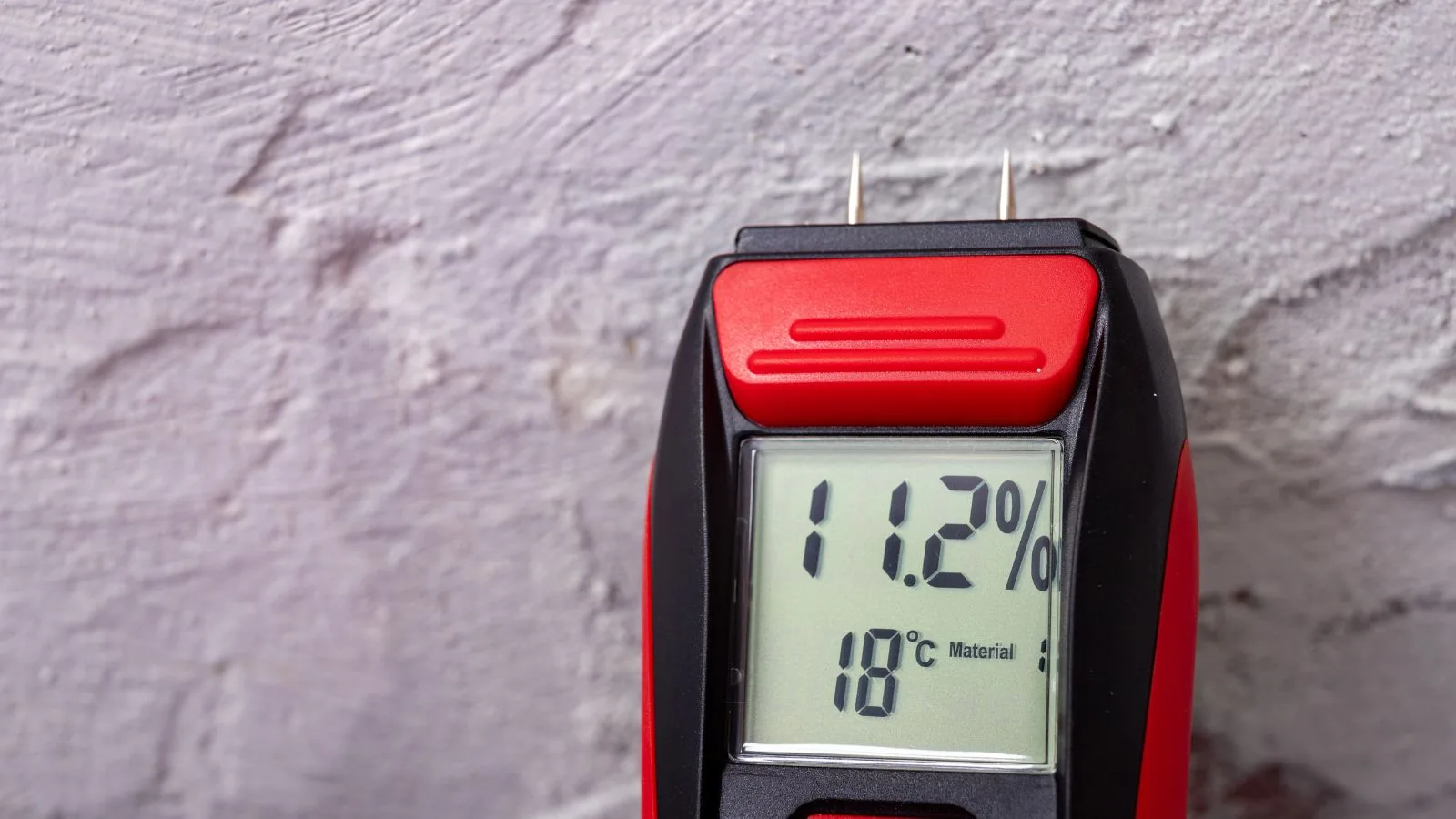
- Moisture meters read the water content of drywall, wood and subfloor.
- A thermal camera shows cool, wet areas behind surfaces.
- Psychrometric readings of air temperature and humidity set the equipment plan.
- Air movers push dry air across surfaces and LGR dehumidifiers remove the moisture.
- Daily readings compare each material with a dry reference, which becomes the drying goal.
| Equipment | What it does | When it is used |
|---|---|---|
| Air movers | Speed evaporation from surfaces | Floors, wall bases and open cavities |
| LGR dehumidifiers | Pull water from the air at low humidity | Most closed rooms |
| Desiccant dehumidifiers | Dry very low humidity spaces | Cold or very wet environments |
| Injectidry or cavity systems | Push dry air into wall cavities | Walls that cannot be opened |
Why Florida Humidity Makes Drying Harder
Outdoor air in the Tampa Bay area is humid for most of the year, so the dehumidifier has to do more than it would farther north. Doors and windows stay closed during drying so the equipment is working on the room and not on the weather.
The National Weather Service reports that heavy rainfall peaks from July to early September. If a leak happens then, drying takes more care because every opening lets in wet air.
Crews follow the practices in the ANSI/IICRC S500 standard for water damage restoration, and you can ask any company whether its crews work to it. After a storm, read storm water damage cleanup too. Crews in Wimauma and Sun City Center use daily logs.
Water Still Spreading? Call Now
The 24/7 line is open. We explain the scope and the price before any work starts.
When Drying Is Done, Repairs Begin
Once the readings match the dry reference, the equipment goes home. Wet drywall that could not be saved is replaced and floors are repaired. Wall and drywall repair and carpet water damage restoration explain what comes next.
Drying After Hours: A Leak Does Not Wait for Morning
Water keeps spreading into drywall and subfloor every hour it sits. Our 24/7 line takes calls at night and on weekends, and a same-day setup is available when a crew is free. Starting drying early often keeps more of the building materials in place.
If extraction has not happened yet, start there with water extraction. Drying equipment works best on materials that are damp, not standing in water, so the order matters. Ask the crew to show you the readings on the first day and again on the last.
What to Do Before Drying Equipment Arrives
- Remove standing water and wet rugs.
- Open cabinet doors and closets so air reaches wet walls.
- Keep exterior doors and windows closed.
- Move electronics and papers to a dry room.
- Write down where the water came from and when.
What affects the cost of structural drying
Cost follows the number of rooms, the materials, the equipment count and the days it stays. A larger loss needs more machines for longer.
Insurance may cover drying after a sudden loss, so check your policy or ask your insurer. Want your real number? Call (813) 738-0233.
- Rooms and square footage
- Materials involved
- Number of air movers and dehumidifiers
- Days of drying
- Documentation for your insurer
Drying Questions From Sun City Center Homes
Drywall and the framing behind it hold water long after the surface looks dry. A meter reading shows what remains.
It commonly runs several days, and daily readings decide the end date. A larger loss takes longer.
It helps with a small damp room. A real loss needs air movers and LGR dehumidifiers with readings.
Air movers, dehumidifiers, and often a thermal camera and meters for checks. The crew explains where each goes.
Yes, drying runs continuously. Noise is a trade-off for a shorter job.