People often ask whether a stain is from a recent leak or an old one. The honest answer is that you cannot date it by eye, but several clues together give a good picture. If water is still coming in, call our 24/7 line at (813) 738-0233 and a same-day response is available when a crew is free.
This matters for repairs, for selling a home and for insurance, since many policies treat sudden damage differently from damage that built up over time.
Signs of Fresh Water Damage
- Wet or cool to the touch, with drips or dampness you can feel.
- Darker, more saturated color that has not formed a hard edge.
- Soft, swollen or sagging material that still holds water.
- Little or no musty smell yet.
- Moisture meter readings well above the dry reference.
Signs of Old or Repeated Water Damage
- Dry stain with a crisp, brown ring at the edge, sometimes several rings.
- Peeling or flaking paint and crumbling drywall.
- Musty odor, spotting or visible growth.
- Warped or stained wood trim that has hardened.
- Rusty fasteners or stained metal.
| Clue | Points to new damage | Points to old or repeated damage |
|---|---|---|
| Surface feel | Wet, soft, cool | Dry, brittle or crumbly |
| Stain edge | Soft and spreading | Hard ring, may show layers |
| Smell | Little or none | Musty or earthy |
| Meter reading | High and falling with drying | Low or normal, but may spike after rain |
| Growth | Rare in the first day | Common after several days or repeated wetting |
A dry brown ring does not prove the leak is over. Repeated wetting can leave several rings, and a leak that only shows during storms may be active in a roof, a window or a pipe.
Read ceiling water damage repair for how stains are checked and wall and drywall water damage repair for walls.
What a Moisture Reading Tells You
A meter compares the material to a dry reference. A dry stain with a normal reading suggests an old leak that has stopped. A high reading on the same stain suggests moisture is still present.
A thermal camera helps by showing cool areas behind a surface. Neither tool dates the damage, but they show whether the material is wet today.
Why the Question Comes Up in Florida
Sun City Center was founded in 1961, and many homes here have decades of roofs, pipes and air conditioners behind them. Wear builds up slowly in places no one sees, such as attics and wall cavities.
We cannot say how often old damage turns up in local homes without a primary source, so we stick to the mechanism. Roofs, condensate lines and supply lines age, and heavy summer rain tests all of them. Hillsborough County Development Services handles permits if repairs involve structural work.
Why the Age of Damage Matters
For repairs, old damage may mean hidden rot or growth behind a surface. For a home sale, a buyer's inspector will look at stains and readings. For insurance, sudden and gradual damage are often treated differently.
Florida Statutes section 627.70132 sets claim deadlines, so reporting a loss early protects your options. Check your policy or ask your insurer about the language that applies.
Dealing With This Right Now?
Call the 24/7 line. We explain the scope and the price before any work starts.
What to Do If You Find Old Damage
Find the source
A plumber, roofer or HVAC technician locates the leak.
Take readings
A moisture reading shows whether the material is still wet.
Open if needed
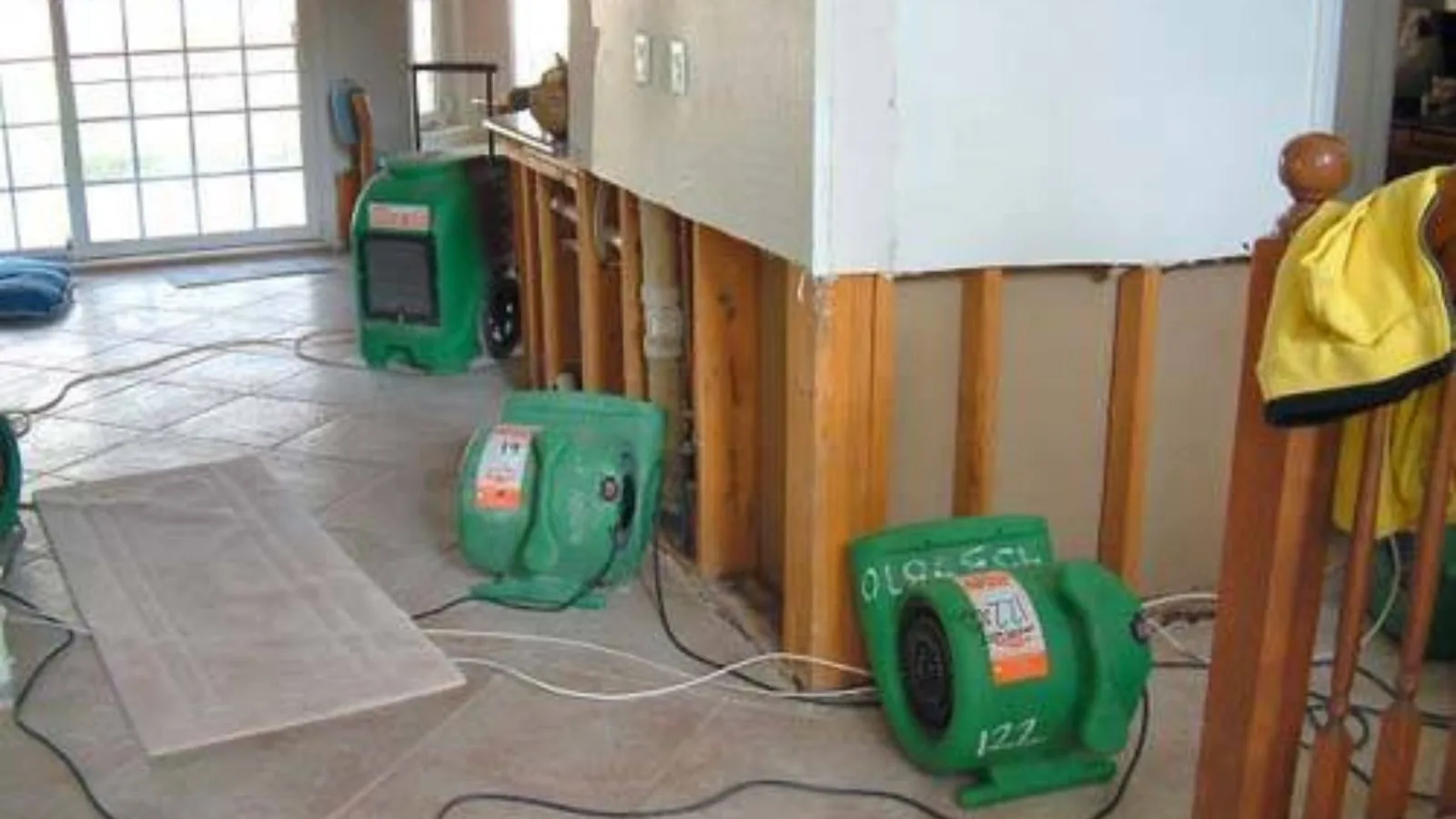
Small inspection holes can show the cavity without a full tear-out.
Dry or replace
Dry what is sound and replace what is rotted. See structural drying.
Crews serving Wimauma and Balm often start with readings and photos for exactly this reason.
Do not paint over a stain until the source is fixed and the material is dry. Paint hides the sign and leaves the cause.
Selling a Home With Past Water Damage
If you plan to sell, keep records of the leak, the repair and the drying. A written reading history is easier for a buyer to accept than a story. Florida disclosure rules apply to known defects, so ask your agent what to include.
If growth was present, a clearance report from an independent licensed assessor adds weight. Our mold remediation page explains what clearance means.
A Quick Decision Framework
| If you see | Then it is likely | Do this |
|---|---|---|
| Wet, soft, dripping | Active and recent | Stop the source, call now |
| Dry ring, normal reading | Old, stopped | Repair finishes, watch for return |
| Dry ring, high reading | Old stain with new moisture | Find the active source |
| Dry ring, appears after storms | Intermittent leak | Check roof, windows and flashing |
This is a guide only. If you are not sure, a reading is the safest way to decide. Do not remove or repair until you know the moisture state.
A stain that returns after painting is a sign that the source was never fixed.
Keeping Records That Help Later
Date your photos, keep invoices and note each time a stain changes. A simple notebook or phone folder is enough. If you later sell the home or file a claim, a timeline shows when you noticed and what you did.
Records also help your contractor decide whether to open the wall. A stable reading over weeks suggests an old stain, while a rising reading suggests an active leak.
Sources and Standards Behind This Page
Moisture-reading methods follow the ANSI/IICRC S500 standard for professional water damage restoration. Claim deadlines come from Florida Statutes section 627.70132, and structural permits go through Hillsborough County Development Services.
Old Versus New Water Damage Questions
Not exactly. Edges, texture, smell and meter readings together suggest whether it is active.
Not always. Leaks that appear only in storms can leave a dry stain between events.
Only after the source is fixed and the material reads dry.
No, but repeated wetting raises the chance. A reading and a look behind the surface settle it.