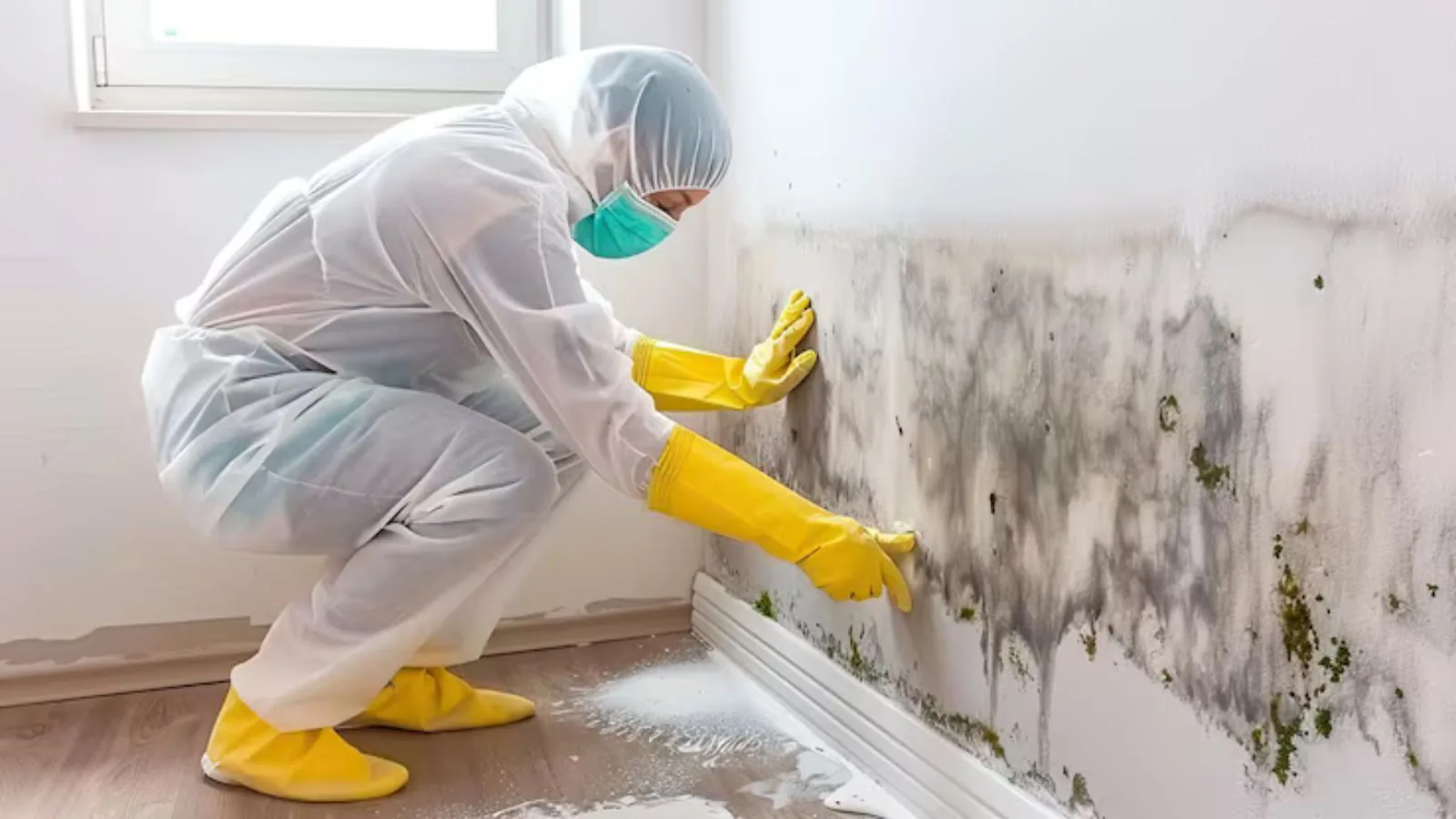
If mold turned up during an inspection or after water damage, a buyer or lender may ask for proof that it was handled. That proof is usually a clearance report from an independent assessor. If water is still coming in, call our 24/7 line at (813) 738-0233 and a same-day response is available when a crew is free.
This post explains the usual sequence, who does what in Florida and how to keep the file buyers want to see. It makes no health claims and is not legal advice.
What Clearance Testing Is
After remediation, an assessor inspects the area and may take air or surface samples. The results are compared with the plan written before work started. If the area meets the protocol, the assessor issues a clearance report.
Clearance is not a lifetime promise. It says the work met the plan on the day of testing. New moisture can start new growth, so the building still needs to be kept dry.
The Usual Sequence
Find and fix the moisture
A plumber, roofer or HVAC technician repairs the source.
Assessment and protocol
A licensed assessor inspects, samples as needed and writes the plan.
Remediation
A licensed remediator removes or cleans materials under containment.
Clearance
The assessor checks the area and issues a report if the plan was met.
Rebuild
Contractors replace drywall, flooring and finishes.
| Role | What they do | Florida licensing note |
|---|---|---|
| Mold assessor | Inspects, samples, writes the protocol, performs clearance | Licensed by DBPR under Ch. 468, Part XVI |
| Mold remediator | Removes or cleans materials per the protocol | Licensed by DBPR |
| Restoration crew | Dries the structure and handles water damage | Works ahead of or alongside remediation |
| Contractor | Rebuilds finishes | Hired after clearance |
Florida rules separate assessing from remediating on the same project, with a 12-month limit on one firm doing both. That separation is meant to keep the person who tests independent of the person who is paid to fix.
Confirm any license with the Department of Business and Professional Regulation before you sign.
What Buyers and Lenders Often Ask For
- The original assessment and protocol.
- The remediation contract or invoice.
- The clearance report.
- Records of the moisture fix, such as a plumber or roofer invoice.
- Drying logs, if there was water damage.
Requirements differ by buyer, lender and loan type, so ask early what they will accept. Do not guess. A short call to your agent or loan officer can save a week.
See structural drying for what a drying log looks like.
Selling in a Retirement Community
Sun City Center is an age-restricted community with about 18,111 housing units at the 2020 Census count, including single-family homes, duplexes, townhouses and apartments. Many sales involve estates or moves on a set timeline.
A clean file helps in those cases. If the home had a leak, gather the plumber invoice, the drying logs and any clearance report before listing. Communities such as Kings Point and Freedom Plaza have their own association rules, so ask the association too.
Common Snags
The biggest snag is an unfixed moisture source. Clearance on a wet wall does not hold. The second is hiring one firm to both test and fix, which may conflict with Florida rules.
A third is waiting until a contract is signed. Start before listing so any fix fits your timeline. Crews serving Apollo Beach and Wimauma help many owners prepare this way.
Dealing With This Right Now?
Call the 24/7 line. We explain the scope and the price before any work starts.
How We Fit In
We handle the water side: extraction, drying and documentation. We explain scope and price before work starts. For mold itself, a licensed assessor and a licensed remediator do their parts, and we can work around their schedule.
Our mold remediation page lists the steps and the testing options.
Questions to Ask Your Assessor
- What sampling will you do and what will it be compared against?
- Will you write the protocol before work starts?
- Do you also do remediation? Florida separates the two roles on a project.
- How long is the report valid for a buyer or lender?
- What happens if the area does not pass?
Good assessors answer these directly. If a firm cannot explain its process, find another. Keep every document in one folder.
If the area does not pass clearance, the remediator corrects the issue and the assessor tests again. A failed first test is not unusual and does not mean the whole job failed.
Costs and Timelines Without Guessing
Cost follows the number of samples, the size of the area and the assessor's travel. Timelines depend on lab turnaround and on how quickly the remediator finishes. We do not quote numbers in articles.
We do explain the scope and the price of the water side before work starts. For the mold side, ask your assessor for the same clarity before you sign.
Keeping the Home Dry After Clearance
- Fix any leak within days, not weeks.
- Service the air conditioner and keep the drain line clear.
- Run bath fans and use a dehumidifier in damp seasons.
- Check under sinks and around windows after heavy rain.
- Keep drying logs if another leak happens.
These habits protect the work you paid for. A dry home is the best support for any clearance report.
Sources and Standards Behind This Page
Clearance practices follow the ANSI/IICRC S520 standard for mold remediation. Licensing and the separation of assessment from remediation come from Chapter 468, Part XVI of the Florida Statutes, administered by the Department of Business and Professional Regulation.
Clearance Testing Questions
No law requires it in every sale. A buyer or lender may ask for it. Check with them.
An independent licensed mold assessor, not the firm that did the removal.
No. It means the work met the plan on that day. Moisture control keeps it that way.
It depends on the scope. Ask the assessor for a timeline.