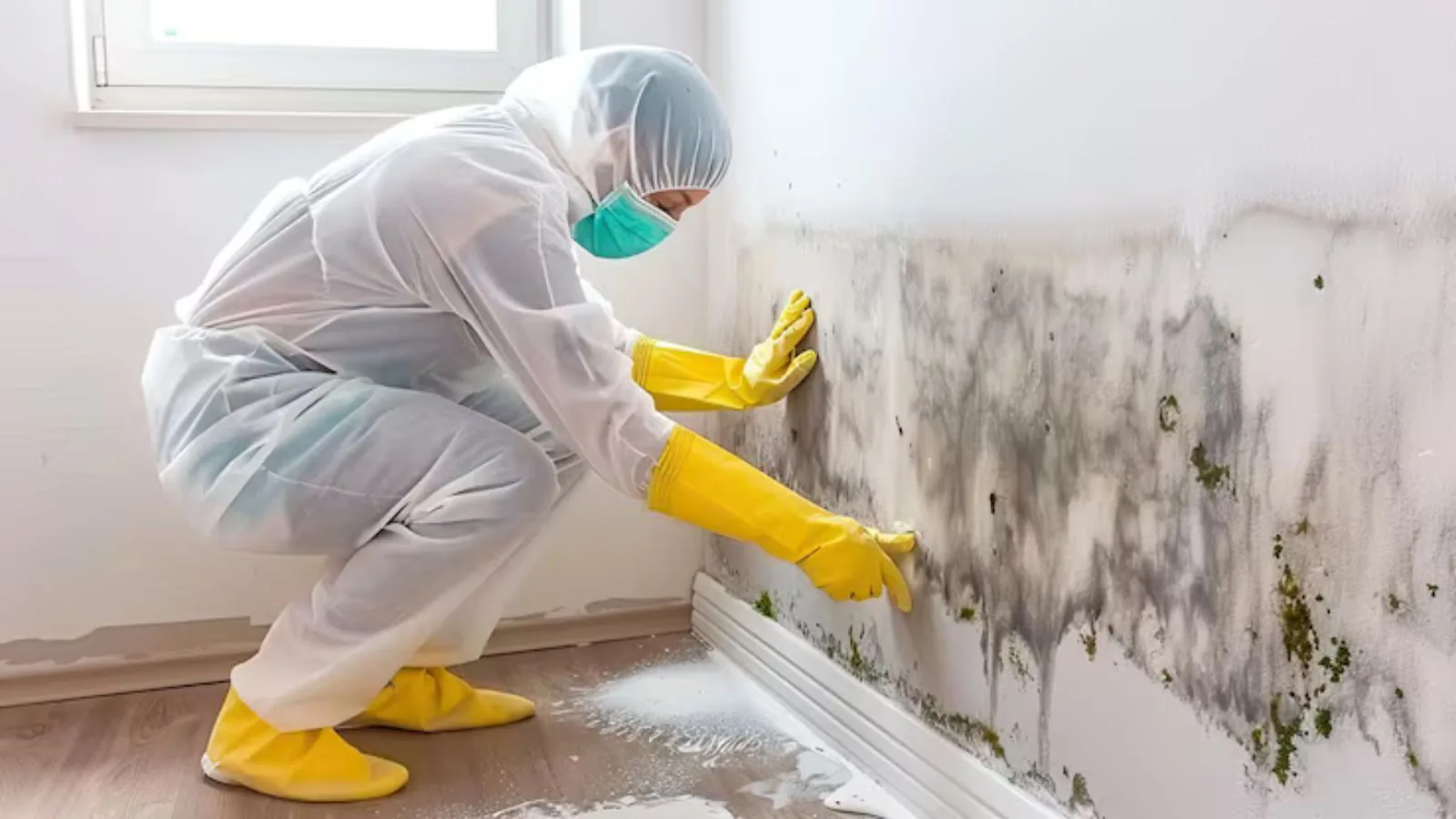
The right way to deal with mold depends on what it is growing on and how far it has spread. A spot on a tile wall and a patch inside a ceiling are very different jobs. If water is still coming in, call our 24/7 line at (813) 738-0233 and a same-day response is available when a crew is free.
This guide sorts common household materials into three outcomes: clean, dry and monitor, or remove. It makes no health claims, and it assumes the moisture source gets fixed first.
Sort the Material First
| Material | Porous or not | Usual outcome |
|---|---|---|
| Tile, glass, metal, sealed countertops | Non-porous | Clean the surface carefully |
| Painted drywall, light growth | Semi-porous | Dry the area, assessor decides on removal |
| Unpainted drywall, ceiling tiles, insulation | Porous | Remove |
| Carpet and pad | Porous | Remove the pad, case by case for carpet |
| Solid framing lumber | Structural | Clean and dry per the protocol |
| Fabric, books, upholstery | Porous | Dry quickly, discard if growth is present |
Porous materials hold moisture and give growth places to anchor. Removing them takes out the food and the roots. Hard surfaces can often be cleaned because growth sits on top.
Do the sorting in a room with the door closed and the air handler off. Wear gloves and a snug mask while you look.
A Safe Order of Work
Fix the source
Repair the leak, clear the drain or seal the entry before any cleaning.
Dry the space
Use a dehumidifier and air movement. Read structural drying for how readings are used.
Remove what is porous
Bag moldy porous materials in plastic before carrying them out.
Clean hard surfaces
Wipe with a detergent solution and dry right away.
Recheck
Look and smell again in two weeks to see if anything returns.
Why Fans Alone Do Not Fix It
A box fan moves air but does not remove water from the air. In Florida, outdoor air is often as humid as indoor air, so open windows may make things worse.
A dehumidifier pulls moisture out of the space. Air movers then speed evaporation from surfaces. The pair works together, which is why drying crews bring both.
Mold and the Florida Calendar
The National Weather Service in Tampa Bay reports that most local rain falls from June through September, with heavy rain peaking from July into early September. That stretch is when closets, garages and rooms with the air conditioner off tend to stay damp.
Plan a quick check of under-sink cabinets, air handler closets and window frames at the start of that season. Catching a drip in June is far easier than finding a stain in September.
When the Job Is Too Big for a Homeowner
- Growth covers a large area or appears in several rooms.
- It came from sewage or flood water.
- It is inside walls, ceilings or the air system.
- The smell returns after you remove visible growth.
- You are preparing a home for sale or a loan.
In those cases, a licensed assessor and a licensed remediator are the right route. Florida licenses both under Chapter 468, Part XVI, and separates the two roles on a project. Our mold remediation page explains the steps.
Neighbors in Wimauma and Balm often start with a moisture reading to see how far the damp goes.
Dealing With This Right Now?
Call the 24/7 line. We explain the scope and the price before any work starts.
Products That Make Problems Worse
Spraying scented products over a musty smell hides it without drying anything. Painting over growth traps it. Fogging a room without removing wet materials only treats the air.
Bleach on porous materials can leave water behind while the surface looks cleaner. Any product is only a tool. The fix is dry materials and a dry building.
Room-by-Room Checklist After a Leak
- Bathroom: ceiling above the tub, caulk lines, under the vanity.
- Kitchen: under the sink, behind the dishwasher, at the refrigerator line.
- Laundry: supply hoses, drain box, floor around the washer.
- Bedrooms and closets: exterior walls, corners, window frames.
- Garage and utility room: water heater base, air handler pan, floor drain.
Go room by room with a flashlight and note anything soft, stained or musty. Check twice a year, once before the rainy season and once after. A written note with dates makes patterns easy to see.
If you find a soft spot, do not poke it open yourself. A moisture reading shows how far it goes, and opening the wrong spot can spread debris. See wall and drywall water damage repair.
Cost and Scope Without Guessing
Removal and cleaning cost depends on the area, the materials, the containment and the testing. A small hard-surface clean-up is a different scale from removal across a ceiling and wall.
We do not publish prices in articles. We explain scope and price before work begins, and we say plainly when a job needs a licensed assessor first.
A final word on timing. If wet materials are dealt with in the first day or two, the chance that growth ever starts drops sharply. Call early, dry fast and keep readings.
What to Do Before You Start Cleaning Mold
- Fix the moisture source first.
- Turn off the air handler serving the room.
- Wear gloves, eye protection and a snug mask.
- Do not mix bleach with other cleaners.
- Bag porous materials in plastic before carrying them out.
Sources and Standards Behind This Page
Remediation steps in this guide follow the approach in the ANSI/IICRC S520 standard for mold remediation. Florida licenses mold assessors and remediators under Chapter 468, Part XVI of the Florida Statutes.
Getting Rid of Mold: Questions
Either can be used on a hard surface, but neither fixes the moisture. Never mix cleaning products.
No. Paint hides growth and leaves the moisture. Remove or clean and dry before painting.
Porous items with growth are usually discarded. Hard items can sometimes be cleaned.
No odor, dry materials and a clean follow-up check. For sales or loans, an assessor can provide clearance.