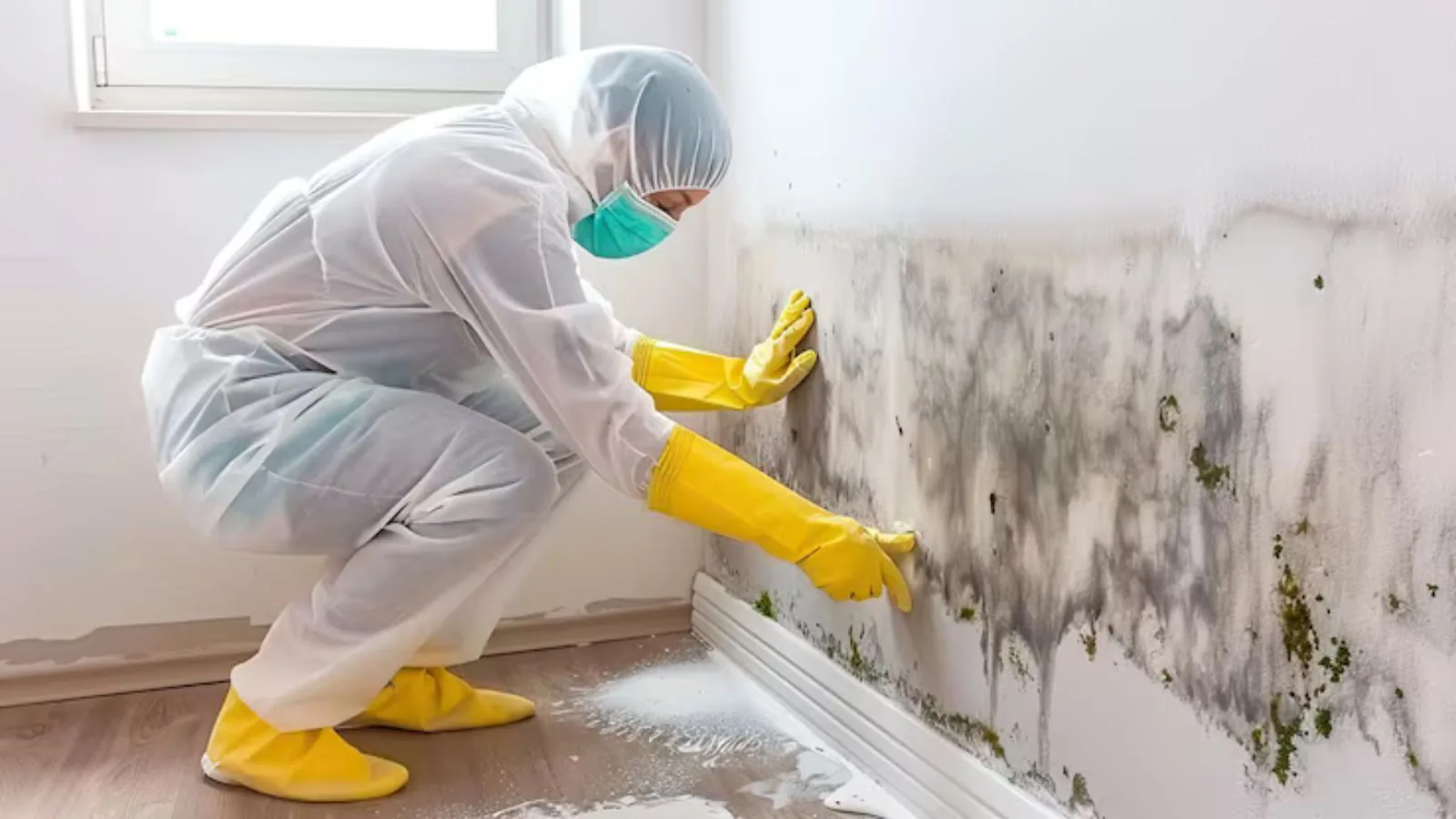
Dark mold on a wall or ceiling usually means moisture has been present for a while. The only lasting fix removes the water source first and then deals with the growth. If water is still coming in, call our 24/7 line at (813) 738-0233 and a same-day response is available when a crew is free.
This post gives practical steps and explains where Florida law draws lines. It makes no health claims. If you have health concerns about your indoor air, talk to a doctor.
Step One Is the Moisture, Not the Mold
Mold grows on damp materials. If the leak, the humidity or the condensation stays, growth returns after any cleaning. Look for plumbing leaks, roof leaks, air conditioner drains and closed rooms with no airflow.
Once the source is fixed, the wet materials have to be dried. Read structural drying for how moisture is checked.
What Not to Do
- Do not sand or scrub dry growth, which can spread spores.
- Do not paint over it, since the surface looks fixed while moisture remains.
- Do not mix bleach with other cleaners.
- Do not run the air handler to the affected room.
- Do not ignore a musty smell that returns.
Small Patches Versus Larger Areas
| Situation | Typical approach | Who handles it |
|---|---|---|
| Small surface spot on a hard surface | Fix the moisture, clean carefully | Homeowner, with care |
| Growth on drywall or ceiling | Remove affected material under containment | Licensed remediator |
| Growth in several rooms or in the air system | Assessment, protocol, removal and clearance | Licensed assessor and remediator |
| Growth after sewage or flood water | Remove contaminated materials first | Restoration crew |
Porous materials like drywall, insulation and carpet are removed when growth is present. Hard surfaces like tile can often be cleaned. The remediation plan decides which is which.
Florida Licensing in Plain Terms
Florida regulates mold assessors and mold remediators through the Department of Business and Professional Regulation under Chapter 468, Part XVI of the Florida Statutes. The rules also separate assessing from remediating on the same project, with a 12-month limit on one firm doing both.
If you hire someone for a larger job, ask to see their state license and confirm it with the department. Our full process is on the mold remediation page.
Why Black Mold Comes Back
Regrowth almost always means moisture returned or was never fully dried. A hidden leak, a closed bathroom with no fan or a wall cavity that stayed damp can feed growth again.
Keep indoor humidity in a range your air conditioning can handle, and fix drips right away. See AC leak water damage for a common source.
When to Call for Help
Call if growth covers more than a small spot, if it appears after water damage, or if a smell returns after cleaning. A crew can check moisture and explain the next step.
Neighbors in Balm and Apollo Beach see the same pattern after summer storms.
Dealing With This Right Now?
Call the 24/7 line. We explain the scope and the price before any work starts.
What a Proper Removal Looks Like
Assess
A licensed assessor finds the extent and writes a plan.
Contain
Plastic sheeting and negative air keep spores from moving to other rooms.
Remove
Affected drywall, insulation and other porous materials are bagged and removed.
Clean and dry
Framing is cleaned and dried, and surfaces are wiped and vacuumed with filtered equipment.
Verify
A post-remediation check, often with sampling, confirms the plan was met.
The industry guideline for these steps is the ANSI/IICRC S520 standard. We do not promise how a surface will behave in the future, because new moisture can start new growth.
Spraying a product on visible growth and leaving it does not follow this sequence, and it often hides a moisture problem.
Selling a Home After Mold
If you plan to sell or refinance, keep the assessor's protocol, the invoices and any clearance report. Buyers and lenders may ask for them. Read the mold remediation page for how clearance testing fits in.
Disclose what the law and your agent require. A clean record of the fix is usually more reassuring than silence.
Humidity Habits That Help
- Run bathroom fans during and after showers.
- Fix drips and weeping fittings right away.
- Keep the air conditioner serviced and the drain line clear.
- Do not block vents with furniture in closed rooms.
- Dry wet items within a day or two.
Bathrooms, Closets and Other Usual Suspects
Bathrooms collect steam, closets trap still air and window frames collect condensation. Growth in these spots is usually tied to humidity and not to a single leak, so ventilation is part of the fix.
Check the underside of sinks, behind toilets and around tub caulk. Look at the ceiling above showers. A soft spot or peeling paint is a hint that water is moving through the material.
After a leak or storm, our 24/7 line is open if you need extraction or drying before growth gets a start. Crews serving Apollo Beach and Wimauma handle these calls year round.
Dry materials within a day or two and the odds of growth fall sharply. Waiting a week gives it room to start. Also check the area again two weeks later with a flashlight and your nose.
Cost Factors Without Guessing a Number
Removal cost follows the area affected, the materials removed, the containment needed and the testing steps. A small contained patch is a smaller job than growth through a wall cavity and ceiling.
We do not quote prices in articles. We explain scope and price before work starts, and the number depends on what the readings and the assessor's plan show.
Black Mold Questions
We make no health claims. Color does not identify a type. A licensed assessor can sample and interpret results.
Bleach does not fix the moisture and can leave porous materials wet. Dry the source first.
A small spot on a hard surface can be cleaned carefully. Larger areas call for a licensed remediator.
Fix the moisture source, dry materials fully and keep humidity under control.