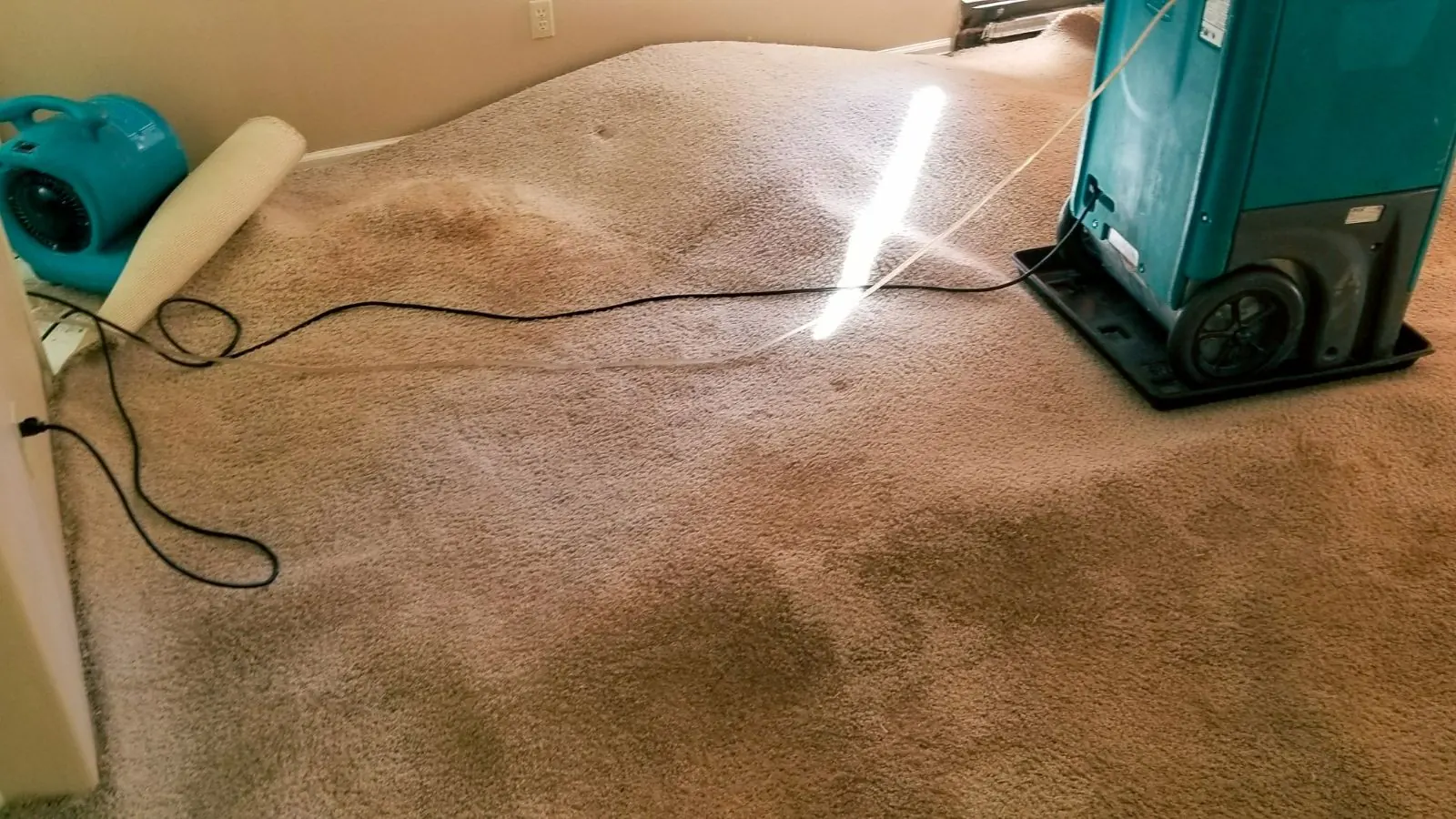
Mold can begin to grow on wet materials within about one to two days, and visible growth often follows within several days if they stay wet. The U.S. Environmental Protection Agency advises drying wet materials within 24 to 48 hours to prevent growth. If water is still coming in, call our 24/7 line at (813) 738-0233 and a same-day response is available when a crew is free.
Those numbers are guides, not clocks. Temperature, humidity, the type of material and the water source all change the pace. This post explains the timeline and how to stay ahead of it.
A General Timeline
| Time after water | What may be happening | What to do |
|---|---|---|
| 0 to 24 hours | Materials absorb water, little growth yet | Stop the source, extract, start drying |
| 24 to 48 hours | Growth can begin on damp surfaces | Dry materials, remove what cannot dry |
| 2 to 7 days | Visible spots may appear, odor can develop | Check walls and floors with meters |
| After a week | Growth can spread inside wall cavities | Assessment and possible removal |
This table is a general guide only. Some jobs go faster and some slower, which is why readings beat calendars.
Water type matters too. Sewage and flood water carry more organic material and need removal of porous materials soon, as described in the water category rules our crews follow.
What Speeds Growth Up
- Warm temperatures, which are common in Florida most of the year.
- Humidity above the level your air conditioner can control.
- Porous materials like drywall, carpet pad and ceiling tile.
- Little airflow, such as in closed closets or wall cavities.
- Standing water that is not extracted.
Tampa Bay summers combine heat and humidity, so the early window matters. The National Weather Service reports that 55 to 70 percent of the area's rain falls from June through September.
During those months, a storm leak on a Friday evening needs attention before Monday. Our 24/7 line is open nights and weekends for that reason.
How to Beat the Clock
Extract the water
Remove standing water as soon as it is safe. See water extraction.
Remove porous wet items
Carpet pad, wet insulation and soaked drywall hold water and come out.
Dry with equipment
Air movers and dehumidifiers run with daily readings.
Verify
A dry reference reading ends drying. Not a guess.
What Slab Homes Mean for Timing
Many homes in Sun City Center sit on concrete slabs. Concrete holds water and releases it slowly, so carpet and wall bases can stay damp longer than they appear. That raises the value of a moisture reading a few days after a leak.
Because we cannot cite a local frequency for slab moisture problems, we describe only the mechanism. Walls and floors in contact with a damp slab can wick water upward for days.
Signs It May Already Have Started
A musty smell is the first sign most people notice. Others include peeling paint, bubbling wall surfaces and dark spots on the back of baseboards.
If you see these after a leak, do not scrub or spray. Close the door, turn off the air handler serving that room and read mold remediation to learn what an assessment involves.
Dealing With This Right Now?
Call the 24/7 line. We explain the scope and the price before any work starts.
What Moisture Meters Add
A meter reads the water content of drywall and wood. A thermal camera shows cool, damp areas behind surfaces. Together they show where moisture remains even when the room looks dry.
Crews serving Apollo Beach and Wimauma rely on those tools for the same reason.
Different Materials, Different Clocks
| Material | How it holds water | Risk if left wet |
|---|---|---|
| Drywall paper face | Absorbs fast, dries slowly | High, growth on the paper |
| Carpet pad | Sponge-like | High, usually removed |
| Solid wood framing | Absorbs slowly, releases slowly | Moderate, depends on time wet |
| Tile and sealed stone | Barely absorbs | Low on the surface, but grout and backer can hold water |
| Concrete slab | Holds water in pores | Low for growth, but feeds moisture to materials on top |
Porous materials move first, which is why they are often removed after a Category 2 or 3 loss. Dense materials take longer to show a problem but also take longer to dry.
A good drying plan treats each material for what it is. A single fan cannot do that.
What a Daily Reading Log Shows
A drying log lists the date, the moisture reading at each marked spot and the equipment running. As numbers fall toward the dry reference, the risk of growth falls too.
If readings stall, the crew moves equipment, opens a cavity or adds a dehumidifier. This active management is the practical way to beat the 24 to 48 hour window.
You can ask to see the log at any time. A company that takes readings is happy to share them. They also help if you later file a claim, since they document what was wet and when.
If you need help right away, our line is open 24/7. A crew can often start the same day when one is free.
After the First Week
If materials were wet for more than a few days before anyone dried them, treat the loss with more caution. Smell, soft spots and spotting are all reasons for an assessment.
A licensed assessor can sample and write a protocol. Read the mold remediation page to see how that process runs in Florida.
Sources and Standards Behind This Page
According to the U.S. Environmental Protection Agency, wet materials should be dried within 24 to 48 hours to prevent mold growth. Drying methods follow the ANSI/IICRC S500 standard for professional water damage restoration.
Mold Timeline Questions
It can begin within a day or two on materials that stay wet. That is why drying should start fast.
It helps by lowering humidity. Wet materials still need extraction and drying.
Moisture meter readings compared with a dry reference. Feel is not enough.
No. Quick extraction and drying often prevent it.